Killers of the Flower Moon Review: Scorsese's Epic is a Devastating American Crime Story
Martin Scorsese’s three-and-a-half-hour true crime epic, starring Leonardo DiCaprio and a phenomenal Lily Gladstone, is a monumental and gut-wrenching chronicle of greed and betrayal.
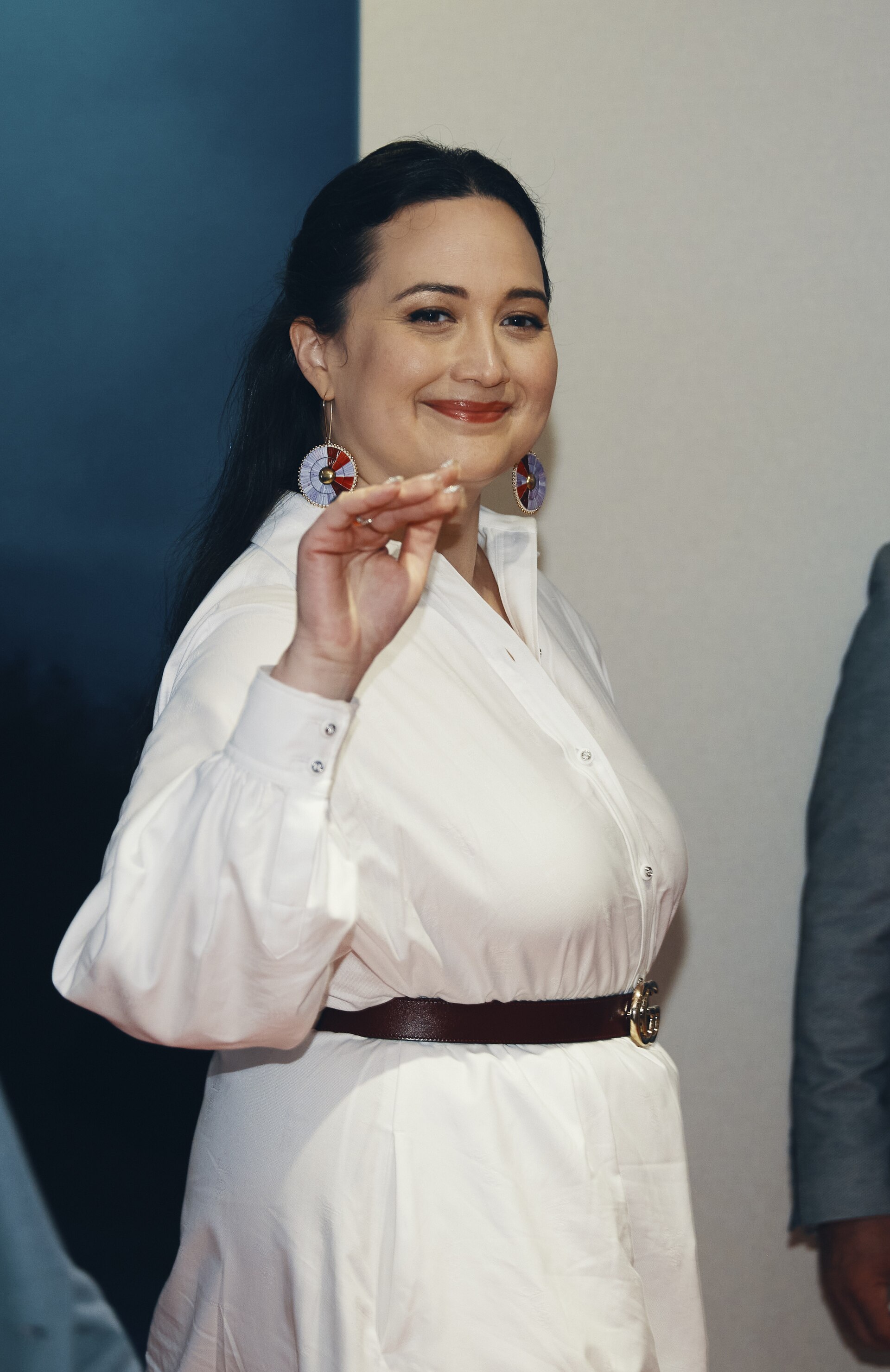
- Director
- Martin Scorsese
- Starring
- Leonardo DiCaprio, Robert De Niro, Lily Gladstone, Jesse Plemons
- Release
- 2023
- Runtime
- 206 minutes
- Rated
- R
- Genre
- Crime, Drama, History
- Lily Gladstone's phenomenal, Oscar-worthy lead performance
- Scorsese's confident, patient direction and masterful craft
- A morally complex narrative that avoids simple heroes
- Immersive historical detail and respectful Osage collaboration
- The 3.5-hour runtime demands significant patience
- The deliberate pacing may feel slow to some viewers
- Shifts tonal focus away from a traditional investigative thriller
Martin Scorsese’s Killers of the Flower Moon is a monumental, harrowing, and essential American epic that uses its immense runtime to dissect a foundational sin with unflinching moral clarity.
Scorsese and co-writer Eric Roth initially drafted a script centered on the FBI investigation, a more straightforward procedural. Leonardo DiCaprio, originally cast as Agent Tom White, pushed for a seismic shift. After meeting with the Osage Nation, Scorsese realized the true story’s heart lay not in the lawmen who arrived late, but in the corrosive, intimate evil within the community. The film became a story about a marriage—the union of the weak-willed Ernest Burkhart (DiCaprio) and the resilient Osage woman Mollie Kyle (Lily Gladstone)—poisoned from within by the greed of his uncle, the monstrously charming cattle baron William King Hale (Robert De Niro). This choice transforms the film from a mystery into a tragedy of Shakespearean proportions, where the audience knows the killers from the start and watches, horrified, as the trap slowly closes.
Why is Lily Gladstone’s performance so celebrated?
Her work is the film’s soul. As Mollie, Gladstone communicates volumes through stillness, a wary gaze, and subtle shifts in posture. She portrays a woman navigating immense wealth, systemic racism, and profound personal loss with a dignified resilience that makes her eventual betrayal all the more heartbreaking. In a film filled with loud, performative evil, her quiet suffering resonates the loudest. This performance rightly earned her a Golden Globe win and made her the first Native American nominee for the Academy Award for Best Actress. Her chemistry with DiCaprio is unnervingly believable, which is the film’s central, tragic mechanism. You must believe in their love for the horror to fully land.
DiCaprio fully commits to Ernest’s pathetic, conflicted nature. He’s a man so morally vacant he can profess love with one breath and plot murder with the next. Robert De Niro delivers one of his most chilling Scorsese turns as King Hale, a villain who cloaks his genocidal avarice in the language of friendship and Christian charity. The supporting cast, filled with talented Native actors like Tantoo Cardinal and Cara Jade Myers, provides crucial texture and humanity to the Osage community Scorsese painstakingly recreates.
A master director working at the peak of his powers
Scorsese’s direction is patient and assured. With cinematographer Rodrigo Prieto, he captures the Oklahoma landscape in all its stark beauty, the oil derricks standing like metallic grave markers on the prairie. The period detail is immersive, from the elaborate Osage clothing to the clattering Model Ts. Editor Thelma Schoonmaker masterfully controls the grim, escalating rhythm, letting scenes of domestic life sit alongside acts of shocking violence. The late Robbie Robertson’s percussive, blues-inflected score provides a relentless, anxious heartbeat.
The film’s 206-minute length is its most debated aspect. It is long, and its pace is deliberate, mirroring the slow, insidious nature of the conspiracy. Some may find sections demanding. Yet the cumulative power is staggering. This isn’t a thriller about whodunit, but a horror about how and why it was allowed to happen. The final act, where the Bureau of Investigation finally arrives, feels almost like an epilogue to the main event—the systematic erasure of a people.
The film’s most brilliant and controversial choice is its coda. Scorsese himself appears in a radio play epilogue that directly confronts the way Hollywood has historically turned Native suffering into entertainment. It’s a bold, meta-textual moment that forces the audience to reckon with their own role as spectators to this tragedy. It’s a reminder that this story, and thousands like it, were buried for decades.
Financially, the film was a loss for its backers Apple and Paramount, failing to recoup its massive budget. Artistically, it is a towering achievement. It was met with widespread critical acclaim, scoring a 93% on Rotten Tomatoes and ten Oscar nominations, including Best Picture. It stands as a late-career masterpiece for Scorsese, a grim companion piece to The Irishman in its meditation on corruption, complicity, and time’s relentless march.
Where does it rank among Scorsese’s films?
Killers of the Flower Moon belongs in the upper echelon of Scorsese’s filmography. It lacks the propulsive energy of Goodfellas or The Wolf of Wall Street, but replaces it with a heavier, more sorrowful gravity. Its closest relative is perhaps Silence, another epic about faith under siege. It is a film of immense formal control and profound moral anger, a history lesson that feels terrifyingly present. It is not an easy watch, but it is an indispensable one.
For more on Scorsese’s legendary career, explore our guide to his greatest films. The film is now available to stream on Apple TV+.
Sources
Frequently Asked Questions
Is Killers of the Flower Moon based on a true story?
Yes. It is based on David Grann's 2017 nonfiction book of the same name, which details the systematic murders of wealthy Osage Nation members in 1920s Oklahoma for their oil rights, a period known as the 'Reign of Terror.'
How long is Killers of the Flower Moon?
The film has a runtime of 3 hours and 26 minutes (206 minutes). Its length has been a point of discussion, though Scorsese and editor Thelma Schoonmaker have defended it as necessary for the story's novelistic scope.
Who plays the main Osage character Mollie Kyle?
Lily Gladstone, an actress of Piegan Blackfeet and Nez Perce heritage, gives a celebrated, Oscar-nominated performance as Mollie Burkhart (née Kyle). Her portrayal is widely considered the emotional core of the film.
Did the Osage Nation work on the film?
Extensively. Scorsese consulted with the Osage Nation throughout production. Over 40 Osage actors were cast, hundreds were extras, and cultural advisors were embedded in the crew to ensure historical and cultural accuracy, particularly with language and customs.
More from The Screen Report
Spielberg's 'Disclosure Day' Review: A Hopeful Thriller Anchored by Emily Blunt
Steven Spielberg returns to sci-fi with a breathless chase movie about government secrets and human empathy, powered by a career-best Emily Blunt.
Dune: Part Two Review - Why Villeneuve's Sequel Beats Part One
Denis Villeneuve's sequel is a darker, bigger, emotionally heavier chapter that earns its near-three-hour runtime — and our spoiler-free verdict explains exactly why it edges out the 2021 original, what the changed ending means, and whether it sets up Dune Messiah.
Everything Everywhere All at Once Review: A Messy Masterpiece Worth the Hype
Daniels' multiverse epic is a sensory assault that hides a plain mother-daughter story underneath the hot-dog fingers. Here's the honest, mostly spoiler-free verdict.
The Batman Review: Pattinson's Noir Gamble Pays Off
Robert Pattinson's raw, year-two Batman stalks Paul Dano's Zodiac-inspired Riddler through a rain-soaked Gotham. It works — and the 2h56m runtime is the only real cost of entry.